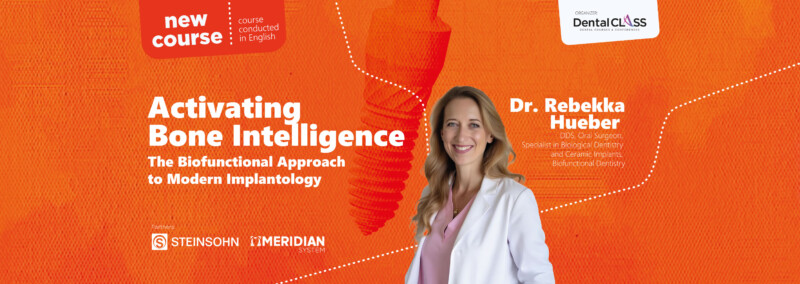
The biofunctional approach to modern implantology
This intensive two-day training goes far beyond traditional implantology.
- Godzina startu:
- 09:00
Course Philosophy
This intensive two-day training goes far beyond traditional implantology. We explore how bone behaves as a living, adaptive organ — how metabolism, signaling, and functional stimuli determine whether implants integrate predictably or fail despite perfect technique.
You will learn how breathing patterns, tongue posture, unilateral chewing, and neuromuscular imbalances silently shape the inflammatory field and influence regeneration.
Day 1 focuses on science and clinical decision-making: bone biology, systemic inflammatory markers, ceramic implant materials and surface technologies, patient selection criteria, functional diagnostics, and an honest deep dive into anterior cases — including what goes wrong and why.
Day 2 puts it all into your hands: biological bone augmentation protocols, immediate vs. delayed placement strategies, step-by-step surgical technique with the Magnetic Mallet, supervised hands-on practice, complication management, prosthetic workflows, and an interactive case planning session.
Key Learning Objectives:
- Understand bone as a dynamic, responsive organ and the biology behind successful osseointegration
- Evaluate systemic inflammatory markers (CRP, cytokines, mitochondrial health) and their clinical impact on implant outcomes
- Compare ceramic implant designs, surfaces (Bioverite), and their behavior in bone vs. titanium
- Select the right patients for ceramic implants — indications, contraindications, and risk stratification
- Identify and address functional disruptors: breathing patterns, chewing asymmetry, neuromuscular imbalances
- Master anterior ceramic implant placement with strategies for soft tissue, provisionals, and error avoidance
- Decide between immediate and delayed implantation protocols specific to ceramic systems
- Apply Smart Bone protocols and biological bone augmentation strategies (A-PRF, scaffolds, growth factors)
- Perform biofunctional implant placement and Magnetic Mallet technique (hands-on on models)
- Manage complications: failed integration, explantation, re-implantation timing, and patient communication
- Plan cases from diagnosis through prosthetic outcome in an interactive group workshop
Target Audience
Implantologists, oral surgeons, and dentists with implantological experience who want to integrate biological, functional, and material science into their clinical practice. Ideal for practitioners transitioning to or expanding into ceramic implantology — and for experienced implantolegists seeking a deeper understanding of why cases succeed or fail.
To register to the course, please contact us directly via email at edu@dentalclass.pl.
Lecturer

-
09:00 – 09:15
Welcome & Course Overview
Introduction, objectives, clinical philosophy, and what makes this course different
-
09:15 – 10:00
Bone as a Dynamic Organ
Metabolism, remodeling cycles, signaling pathways — what determines integration vs. failure beyond surgical technique
-
10:00 – 10:45
Systemic Factors in Implant Patients
CRP, IL-1β, TNF-α, vitamin D, mitochondrial health, telomere integrity — which labs to order and how to interpret tchem clinically
-
10:45 – 11:00
Coffee Break
-
11:00 – 11:45
Ceramic vs. Titanium: Evidence & Immunology
Bioverite surface technology, zirconia behavior in bone, inflammatory profile comparison, peri implant soft tissue response
-
11:45 – 12:15
Ceramic Implant Design Comparison
One-piece vs. two-piece systems, macro- and micro-design features, surface technologies — how to choose the right system for each indication
-
12:15 – 12:30
Patient Selection for Ceramic Implants
Who is a good candidate? Contraindications, risk stratification, systemic red flags — when to proceed and when to say no
-
12:30 – 13:30
Lunch Break
-
13:30 – 14:15
The Functional Field
Breathing patterns, tongue posture, unilateral chewing, swallowing — how neuromuscular imbalances shape the inflammatory environment and bone quality
-
14:15 – 15:00
Functional Assessment in Practice
Clinical functional diagnostics: what to check, how to interpret, when to refer — and how to condition the biological field before surgery
-
15:00 – 15:15
Coffee Break
-
15:15 – 16:00
Anterior Ceramic Implants: Step by Step
Case selection, immediate vs. delayed placement protocols, soft tissue management, provisional solutions during healing — what patients expect and how to deliver
-
16:00 – 16:45
The Most Common Errors in Ceramic Implantology
Positioning errors, prosthetic planning failures, wrong timing, biological pitfalls — a critical and honest review with real cases
-
16:45 – 17:00
Day 1 Wrap-Up & Q&A
Open discussion, participant
-
09:00 – 09:15
Recap of Day 1, introduction to hands-on modules, and key questions from participants
-
09:15 – 10:00
Smart Bone Protocols
Biological bone augmentation strategies: A-PRF preparation, growth factor activation, scaffold selection, regenerative timing, and predictability factors
-
10:00 – 10:45
Immediate vs. Delayed Implantation in Ceramic
Decision tree: when to place immediately, when to wait, staged protocols, socket preservation — and how ceramic-specific healing differs from titanium
-
10:45 – 11:00
Coffee Break
-
11:00 – 12:00
Step-by-Step: Biofunctional Implant Placement
Live demonstration on models: osteotomy design, bone activation, implant insertion protocols for ceramic systems — precise, reproducible, biology-driven
-
12:00 – 12:45
Magnetic Mallet: Technique & Application
Indications, handling, upper jaw protocols, bone condensing — advantages for biologically favorable, minimally traumatic surgery
-
12:45 – 13:45
Lunch Break
-
13:45 – 15:15
Participant Hands-On Session
Guided practice on animal bone and training models: implant placement, bone augmentation technique, Magnetic Mallet, piezo surgery tips — individual coaching
-
15:15 – 15:30
Coffee Break
-
15:30 – 16:00
When Things Go Wrong: Complication Management
Failed osseointegration, explantation protocols, re-implantation timing, soft tissue complications — what to do and how to communicate with your patient
-
16:00 – 16:30
Final Prosthetic Workflow on Ceramic Implants
Prosthetic concepts, material selection, provisional strategies during healing, and the clinical workflow for definitive restorations
-
16:30 – 16:45
Interactive Case Planning Session
Participants bring or receive complex cases — group discussion from diagnosis through treatment plan to prosthetic outcome
-
16:45 – 17:00
Closing, Certification & Q&A
Final discussion, take-home messages, certificate distribution Discussion
Terminy i bilety
Nie mamy jeszcze zaplanowanych terminów tego szkolenia.
Zostaw swoje dane, a damy znać, gdy tylko ruszą zapisy.
Lista rezerwowa
Poznaj opinie uczestników
Sprawdź inne szkolenia


The Smart Step into Metal- free implants
Pacjenci wybierają metal-free. Ci, którzy zaczęli wcześniej, dziś mają przewagę.